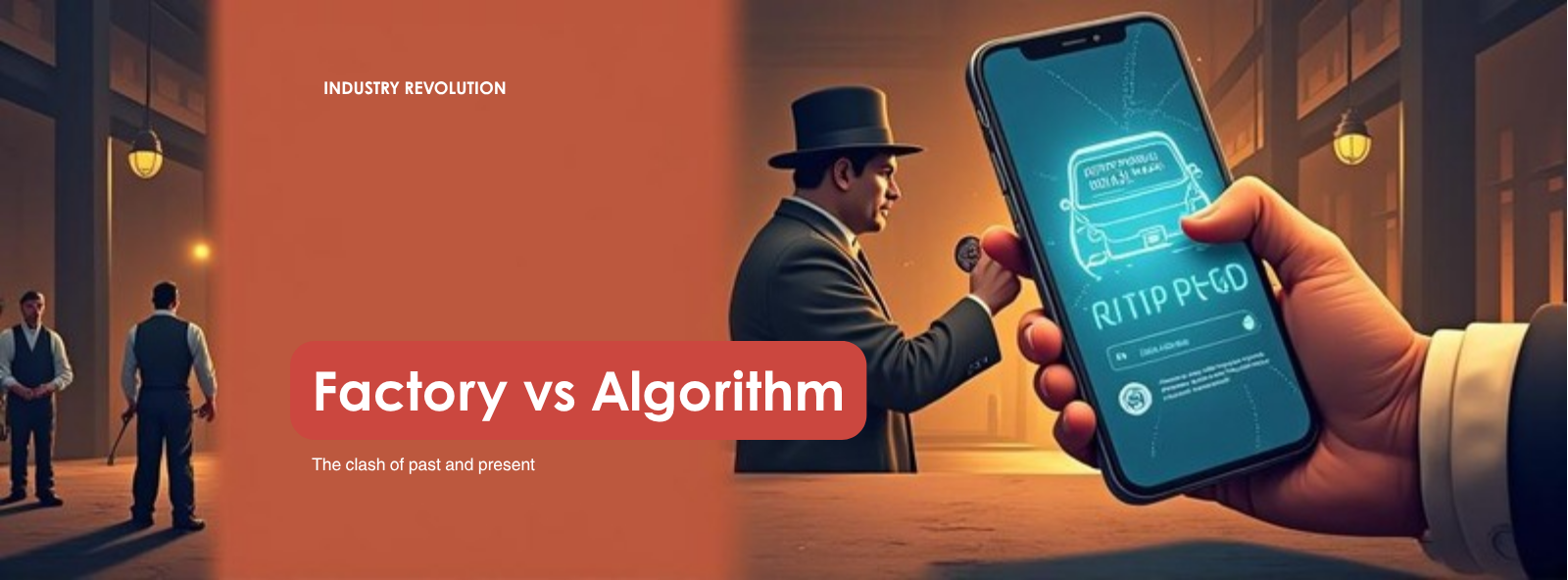
Series 2 – Industrial Revolution & Data Revolution

Series 2: Industrial Awakening — When Machines Rewrote Humanity

Industrial Revolution vs Data Revolution: Is History Repeating?

The 1760s, steam engines transformed production.
The 2020s, AI is transforming work.

Workers feared machines stealing their jobs.
Today, we fear AI replacing humans.

Capitalists rapidly accumulated wealth.
Tech giants become the new oligarchs.

Labor movements arose.
Gig economy protests continue.

Is history repeating itself?


Understanding today’s transformation through 200 years of data

This series uses historical and data comparisons to answer the most pressing questions:

The Future of Work
Will AI really steal jobs? What does 200 years of data say?

Wealth & Inequality
Does tech prosperity lift everyone or make the rich richer?

Growing Pains of Industrial Transition
Who benefits? Who suffers? How do we reduce the pain?

Policy & Regulation
Facing disruptive technology, what are history’s lessons?

The Double Edge of Globalization
Connection brings prosperity but also fragility


Why compare with the Industrial Revolution?

Because we are experiencing the same fears

In 1811, the Luddites destroyed textile machines
In 2023, screenwriters struck against AI

The 1800s, “machines will destroy employment”
The 2020s, “AI will replace all jobs”

But what was the outcome?

The Industrial Revolution ultimately created more jobs and raised living standards — but it took 50 years of painful transition.

Will the data revolution follow the same path? Or something entirely different?

History provides perspective

We can’t predict the future, but we can learn from the past.

Some mistakes don’t need to be made twice.
Some opportunities can be seized earlier.
Some pain can be avoided or eased.

This is not academic curiosity — it’s a survival guide.


What you’ll see

Real data comparisons
How employment structure changed (1800-2020)
The decoupling of wages and productivity
The evolution of wealth inequality
The acceleration of technology adoption

Concrete case studies
Textile workers vs Uber drivers
Railroad barons vs tech giants
Union movements vs gig worker protests

Python data analysis
Historical economic data reconstruction
Inequality metric calculations
Trend forecasting and simulation

Lessons for today
How to position yourself
What policy should do
Personal survival strategies


Who is this series for?

Knowledge workers concerned about career futures
Entrepreneurs wanting to understand industrial transformation
Citizens caring about social fairness
Those wanting to understand the era through data
Anyone curious about “what will we become”


5 in-depth analyses | 200 years of economic data | Python time series analysis

History gives us tools; the future is ours to create


Series Articles

No posts